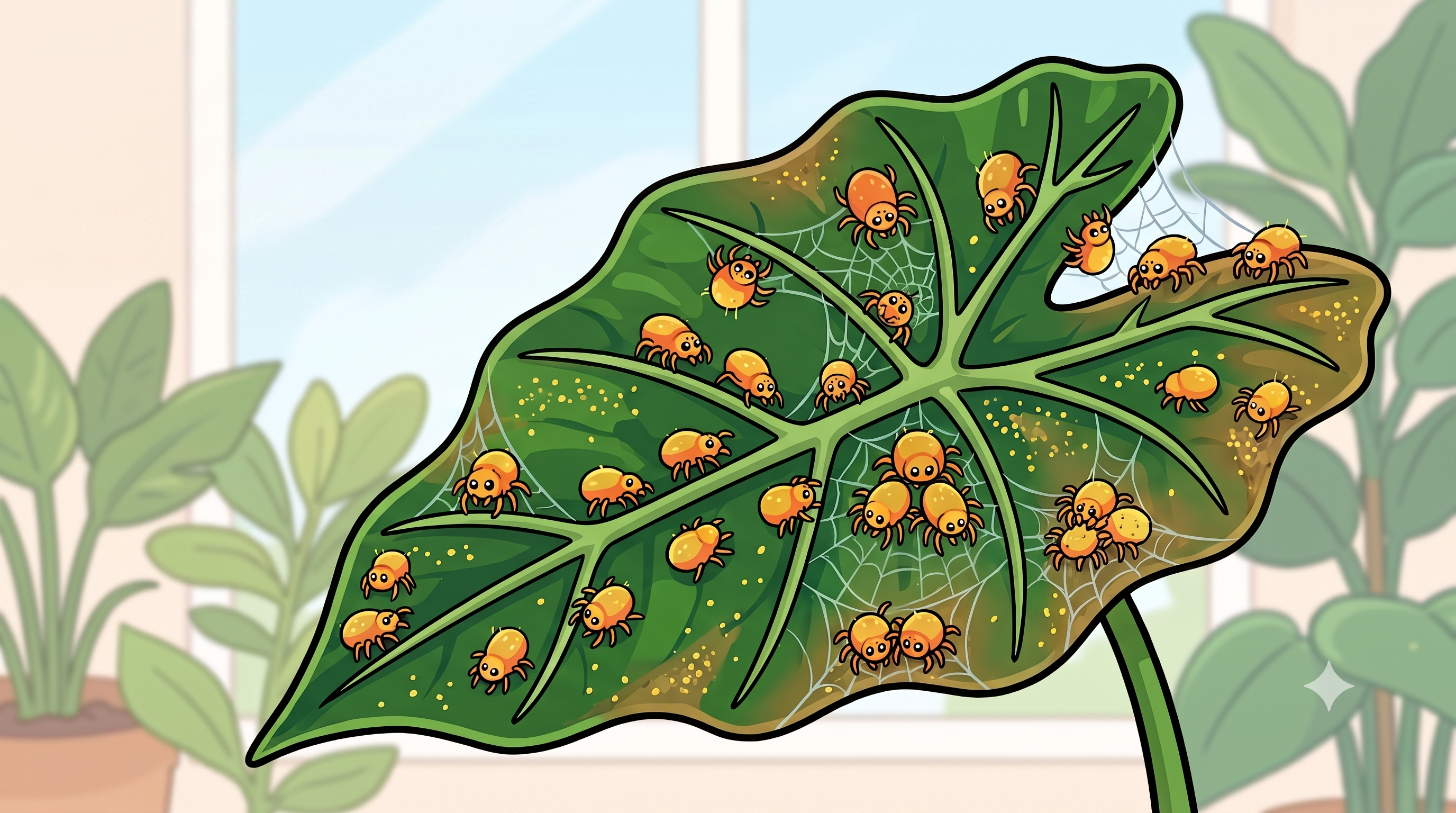
Spider Mites and Alocasias: A Sad End
Spider mites — when it came to alocasias, I finally gave up
In my previous post about common aroid pests, I claimed that spider mites were relatively easy to manage without heavy chemical pesticides. Looking back, that opinion was definitely premature. Sure, they were quite easy to keep in check—if not necessarily eradicate—on my Ficus elastica, a plant with thick, sturdy leaves and a moderate metabolic rate. Unfortunately, things got way more complicated when they finally spread to my alocasias—first the Alocasia cucullata, and later the Alocasia wentii.
Both plants had been taking off like crazy. The wentii, in particular, was pushing out bigger and more mature leaves with every growth cycle. I kept them in semi-hydroponics (specifically, Lechuza PON), and at its peak, the wentii managed to hold between 9 and 11 leaves simultaneously during the summer. Since alocasias love light, I kept them right on a south-facing windowsill in Northern Europe. However, I regularly open that specific window, which I now realize was the most likely way these unwelcome guests broke into my home.
The infestation started on the Alocasia cucullata and swept through the plant incredibly fast—within just a couple of days, most of the leaves were heavily infested. As usual, the mites settled on the undersides of the leaves, which made them hard to spot early on. Regular showers with soft water and weekly preventative sprays with Canna Cure didn’t seem to do much to hold them back.
I started my usual treatment routine: a mixture of NeemAzal and gardening soap, sprayed thoroughly every 3 to 4 days. At first, the tiny pests seemed to clear up, but after just a few days, they flared up again. This forced me into a drastic move. As a last resort, I decided to cut the plant back to just the 2 or 3 youngest leaves and kept up a relentless spraying schedule with everything I had. A month or two later, the plant managed to push out a few new leaves, but the spider mites kept coming back with a vengeance. Lacking the space to permanently isolate a large, light-loving plant, I ultimately decided to throw it out.
Shortly after, they took over my wentii, this time attacking both sides of the young leaves. To cut a long story short, I ended up having to part with that plant too.
Lessons learned
I had to learn a few tough lessons from this failure:
- Fast growth is a double-edged sword. The faster a plant grows, the higher its metabolic rate and cellular turgor. Simply put, its sap is rich in essential nutrients, creating the ultimate breeding ground for pests. In alocasias, this is exacerbated by their thin, soft leaf structure—they lack the tough, fibrous defense mechanisms of plants like Dracaena trifasciata (honestly, I’ve never heard of a snake plant being killed by spider mites).
- Windowsills are high-risk zones. Keeping plants right next to a regularly opened window provides a literal open door for uninvited bugs to drift in and settle on your collection.
- Microclimate matters. Sub-optimal air humidity—especially during hot summer days right next to a south-facing window—creates a perfect storm. In their naturally humid native habitats, alocasias rarely face this level of spider mite pressure, so they haven’t evolved heavy structural defenses against them.
- The hobbyist systemic pesticide myth. For standard indoor growers, there is practically no effective systemic pesticide available for spider mites. Since spider mites are arachnids (not insects), standard consumer-grade systemic insecticides won’t touch them. True systemic miticides are heavily restricted, meaning there is nothing safe you can simply water the plant with to wipe out a root-to-leaf infestation.
TL;DR:
- Never underestimate a pest infestation.
- The wider the gap between a plant’s optimal natural environment and the conditions of your room, the higher the chance it will succumb to pests.
- Windowsills are a double-edged sword: they offer plenty of crucial natural light, but opening them invites pests inside while making it incredibly difficult to maintain high local humidity.