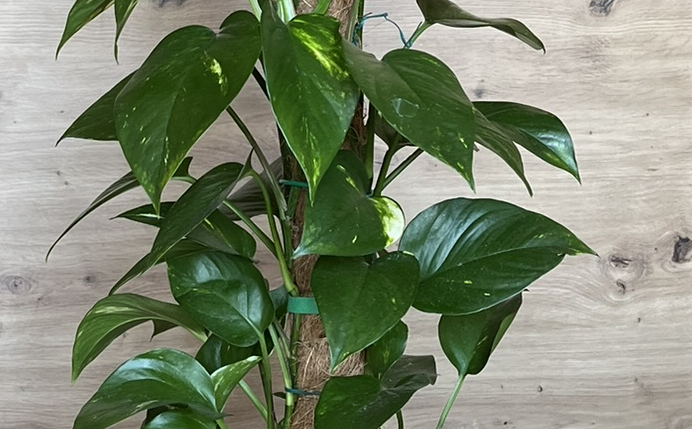
Epipremnum
Golden pothos – in my opinion, a seriously underrated houseplant
People put it anywhere in the room, water it when they remember, and forget to repot. Yet this unique plant still grows. Maybe not at its best, but it doesn’t die either. I went through all of this myself, and after many failures with supposedly more “demanding” plants, I decided to give more attention to this overlooked one – and within just a few months, it doubled in size. So now I’m doing my best to grow the best pothos I can.
To trail or to climb – that’s the question
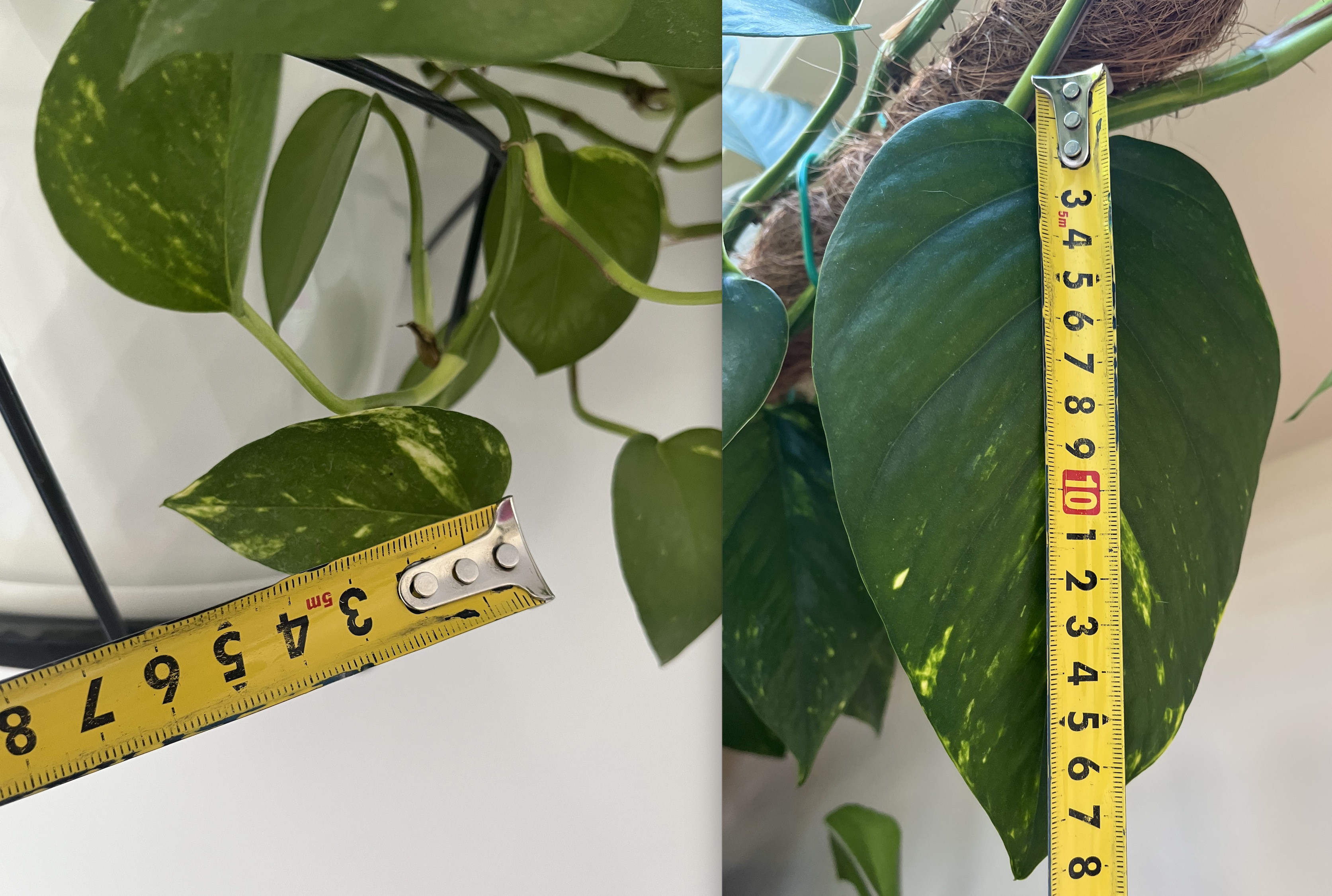
If, like me, you decided to focus more on your pothos, you probably started searching for information and learned that it can grow in various conditions – either as a trailing or a climbing plant. If you dug a little deeper, you probably found out that if larger leaves are your goal, giving it something to climb is the only way. And honestly, there’s something to it.
I started propagating my pothos and placed it in different spots around my home – some as trailing plants, and for one of them, I built a tall pole and regularly attached new growth to it. After some time, I noticed that the trailing ones started to produce smaller leaves, while the climbing one, after a short adjustment period, began growing significantly bigger foliage. Not quite the size of a monstera deliciosa yet – but the difference was obvious.
Like most low-light tolerant plants, it does best in a bright spot
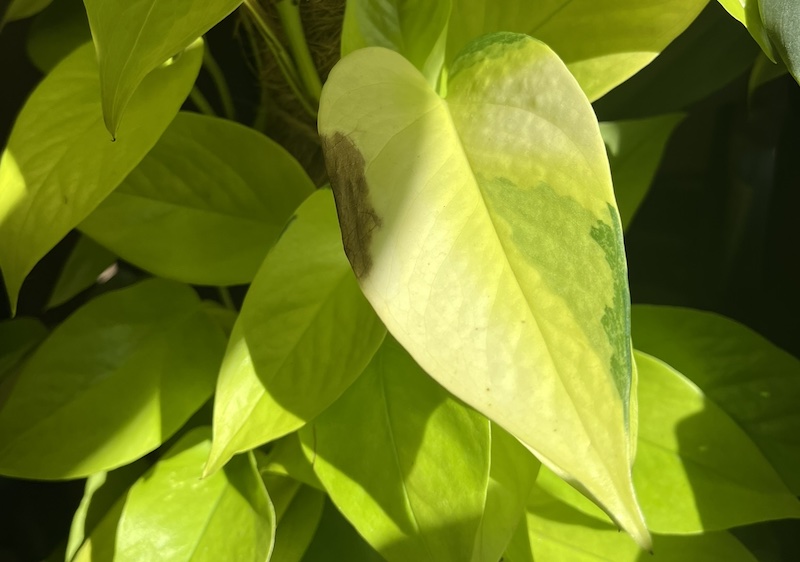
The golden variety seems to thrive in direct sunlight – or at least what counts as direct sun through a south-facing window with triple glazing. I’m specifically mentioning golden pothos because I also have a neon pothos, and I thought that one would need even more light. But I was wrong. Neon pothos definitely benefits from good lighting, but direct sun must be avoided.
I learned this the hard way – new leaves started getting lighter and then developed brown spots. I was sure I hadn’t overwatered it. On the other hand, the golden variety seems pretty tough – it will survive even in low light and still produce new leaves, but it thrives much more in brighter conditions.
Root rot? Still possible.
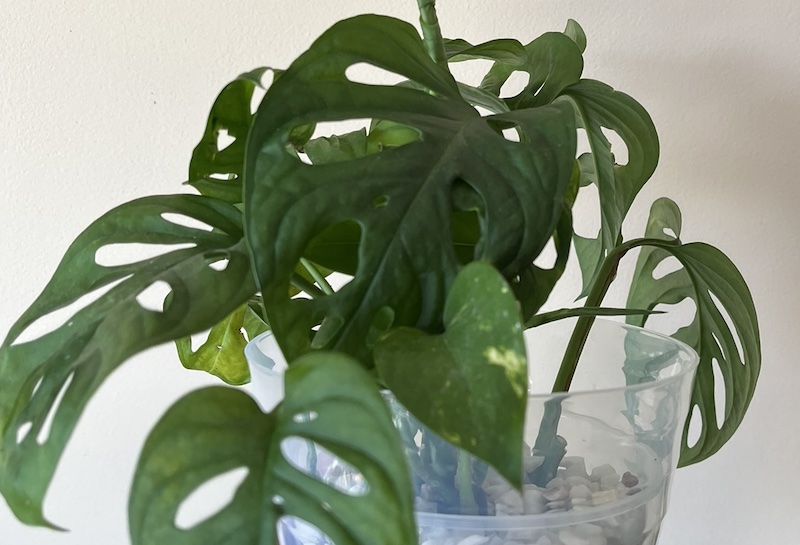
When I first got into indoor plants, I used poor soil mixes and had the bad habit of watering too frequently – because I cared so much and didn’t want to leave them “hungry.” What I learned from that was how different plants deal with root rot. For monstera deliciosa, it might be a death sentence – or at least it requires cutting off and propagating the top. But for pothos, just changing your watering habits usually does the trick.
Of course, a well-draining mix helps, and removing rotten roots won’t hurt, but the chance of the plant surviving its owner’s over-love is pretty high – as long as it’s caught early.
Want more branches? Just cut it.
When you cut a monstera deliciosa or a ficus elastica, you usually get one new baby-sized stem. Sometimes ficus gives two new branches on opposite sides, but with monstera, that’s rare. And in both cases, it takes a while for the leaves to return to their previous size. Pothos is different. Every time I cut a vine, two – and often three – new branches grew. And getting the leaves back to their previous size took just a few weeks. The cuttings are also super easy to propagate – and pothos is even known to release growth hormones into the water it’s placed in, helping other cuttings root faster too. Neon pothos is more difficult though – water propagation didn’t work for me, and the ends kept rotting. I eventually succeeded by planting a cutting directly into soil next to the parent plant.
Oversized pot? Probably okay – still not ideal
Some plants are picky when it comes to pot size – go too big and you risk root rot because of excess water retention. But pothos, again, is more forgiving. Just like with light, a pot that’s slightly too large isn’t a big deal – as long as you’re careful with watering and keep the plant in bright conditions.
Watering – better to forget than overdo it
As mentioned earlier, it is possible to overwater pothos, but it’s not as easy as with monsteras. Sure, dense soil and constant moisture will eventually kill it, but if you use a well-draining mix, it’ll likely forgive your overwatering… I mean, “love.” In general, pothos fits perfectly into a collection of aroids – it has similar watering, soil, and lighting needs. It’s definitely a better match for that kind of setup than ferns or other high-humidity, moisture-loving plants.
Final thoughts
After months of neglect, I started to care more about this common plant. I’ve come to appreciate just how forgiving and rewarding it is. I highly recommend getting one – and not placing it in the dark corner, but front and center in your plant collection. Because this is the kind of plant that survives while others die. Sure, snake plants are also recommended for beginners. But while a snake plant might survive tough conditions, it often won’t grow for years. Pothos, on the other hand, regularly rewards you with new leaves. And I’m starting to believe that – with good enough conditions – its leaf size might even reach that of a well-grown monstera deliciosa.