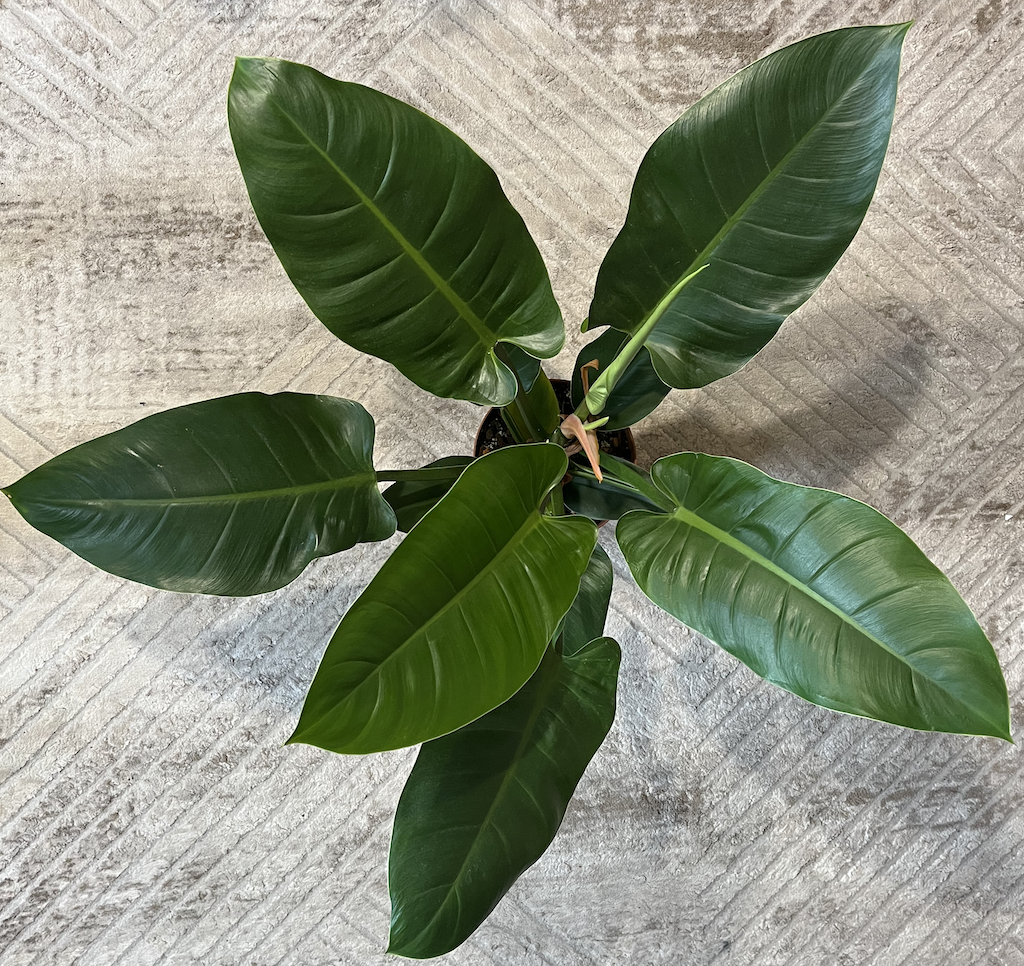
Philodendron Imperial Green
I started my more serious plant journey with the goal of growing the biggest and healthiest Monstera deliciosa possible. But so far, things haven’t gone as smoothly as I expected in the beginning. Some root rot, some periods of no progress, then a smaller leaf than the previous one appears — and a lot of thinking about whether I should water it or wait another couple of days.
And while I’ve spent most of my free time thinking about this plant and how to mimic its natural living conditions in a small room somewhere in Northern Europe, there are some other plants in the same room that just grow — getting bigger and prettier. They seem to not care much about the amount of light or water, and they’re just happy with what they get.
One of those plants — and by the way, one of the biggest and fastest-growing in my collection — is the Philodendron Imperial Green.
Bought as a replacement for a dead monstera
I remember buying this plant a few days after I decided to get rid of a heavily root-rotted monstera. It looked like a stronger, more pest-resistant plant that could tolerate suboptimal conditions — big, tough, and easy-going.
It seems to be much less picky when it comes to light exposure and watering habits. On a south-facing windowsill, it grows like crazy — when one leaf is almost unfurled, the next one is already on its way. It’s also supposed to thrive in lower light — I haven’t tested that yet, and for now, I don’t want to risk slowing down its growth.
Doesn’t need support, but starts to lean slightly toward the sun
Of course, it has a completely different growth pattern — it’s self-heading and doesn’t require any support. Outdoors in full sun, it would probably grow perfectly upright. Indoors, it tends to bend slightly toward the light.
I try to rotate it periodically, but that doesn’t really straighten it — it just starts to lean the other way. But I don’t think it’s a big deal; no living being is perfectly symmetrical.
Not tall, but it takes up a lot of space
In some photos, it might look like a compact plant you could keep on a small desk, but even young specimens are actually quite wide. Mine spans about 80 cm in both directions and takes up too much space to safely keep on a windowsill.
It doesn’t seem to grow very tall — definitely not as tall as a Monstera deliciosa under the right conditions. I can imagine keeping a few of them stacked vertically, maybe mixed with similarly shaped philodendrons in different colors (like Imperial Orange or Moonlight). I’ll definitely try that one day.
Occasionally thirsty
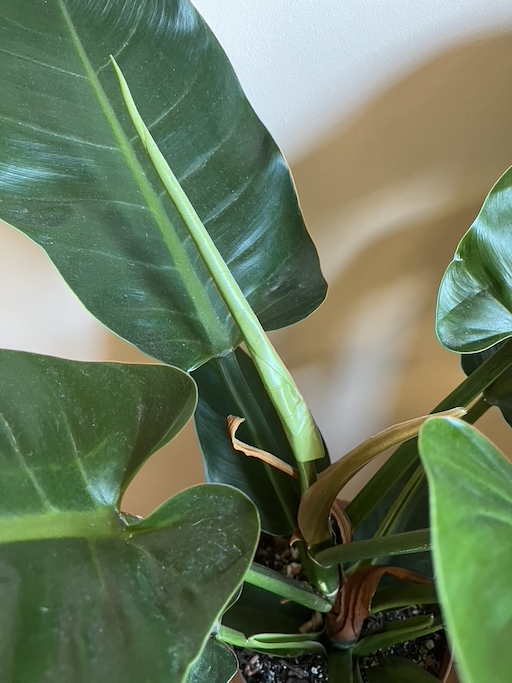
According to many plant enthusiasts, philodendrons should be watered when the soil is dry deeper down — and that seems to work. I’ve tried extending the dry periods as long as reasonably possible, carefully watching for any signs of dehydration, but none appeared even after a 3-week break.
On the other hand, I’ve noticed guttation the day after watering, although it doesn’t last long. To be safe, I use a moisture meter and water it when the level drops below 2 on a 10-point scale.
Final thoughts
This post ended up being pretty short, but honestly, there’s not much more to say — if you like the shape and can accept the size, just buy this plant.
Give it some light — the more light it gets, the faster it grows — and pot it in a good, well-draining aroid mix. For this one, I think mixing regular potting soil with lots of perlite, small LECA, or orchid bark should work just fine.
Tags: easy houseplant, philodendron imperial green, large indoor plant, philodendron care low maintenance plant, south-facing window plants