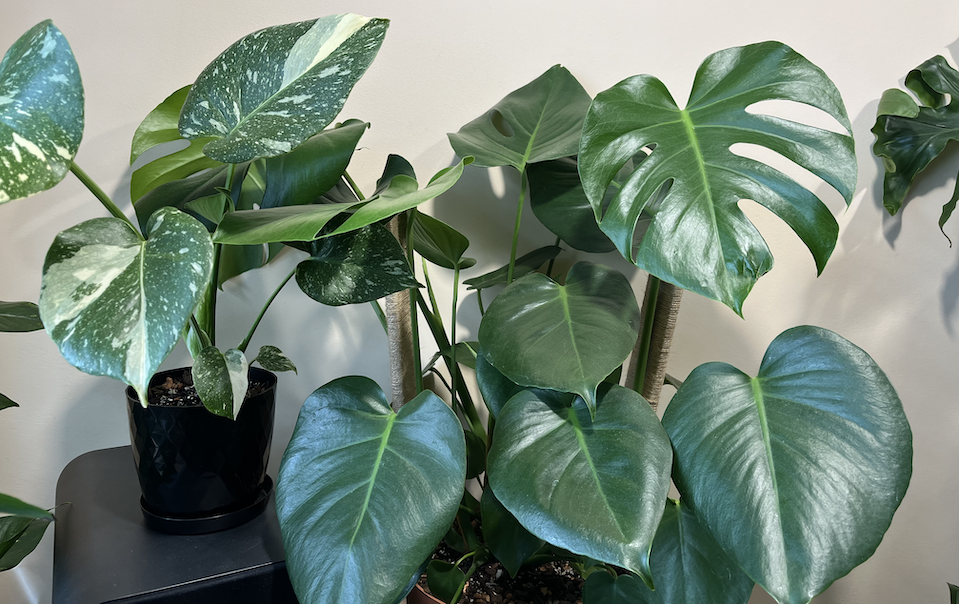
Monstera deliciosa
Introduction
Monstera deliciosa is still one of my favorite houseplants. I cannot imagine my collection without at least one or two. But in my home, it has never been as easy as people often claim. I have seen huge Monsteras survive in bad soil, weak light, and badly sized pots. Mine were much less forgiving. For a long time, root rot kept returning no matter how careful I tried to be.
Why I Like Monsteras
Monsteras are bold, architectural plants with a strong tropical look. Because they climb, they can grow upward on a pole instead of spreading in every direction.
That makes them easier to fit into a room than many large houseplants. They bring plenty of drama without taking over the whole space.
First Failures
My first serious mistake was repotting too quickly into a mix that stayed wet for too long. The plant looked healthy at first, but the roots soon turned brown and mushy. I tried to save it by trimming the rot, moving it into a smaller pot, and switching to a chunkier aroid mix. New leaves eventually appeared, but they were small, damaged, and clearly unhealthy. When I checked the roots again, the bottom of the pot was still wet after many weeks. That was when I gave up on that plant and started over. Later I lost a large form as well. It struggled from the start, grew slowly, and never seemed truly established. One small change in the mix was enough to push it into another round of rot. I moved it into a clear pot and added about 20% peat-free soil because the roots looked a little dry. Two weeks after watering, the roots were black and mushy, and even the top cutting could not be saved.
What Changed
After that, I stopped blaming only the pot or the soil. I had a south-facing window, grow lights, transparent pots, and decent fertilizer, so the real problem had to be somewhere else. The clue was my tap water. After moving, I noticed heavy limescale everywhere and much drier skin in my household. The water was clearly harder than what I had used before. Once I started measuring it, the issue looked bigger than hardness alone. The water was above 20 dH, and the pH was also high. For tropical plants, that combination matters. If the water is too hard and the pH is too high, roots can struggle to take up water and nutrients properly.
What Helped
I now mix tap water with reverse osmosis water, using slightly more RO water than tap. That still gives the plants some calcium and magnesium without pushing conductivity too high. Softer water is also much easier to adjust. It takes far less acid to bring the pH into a range that seems more workable for tropical plants.
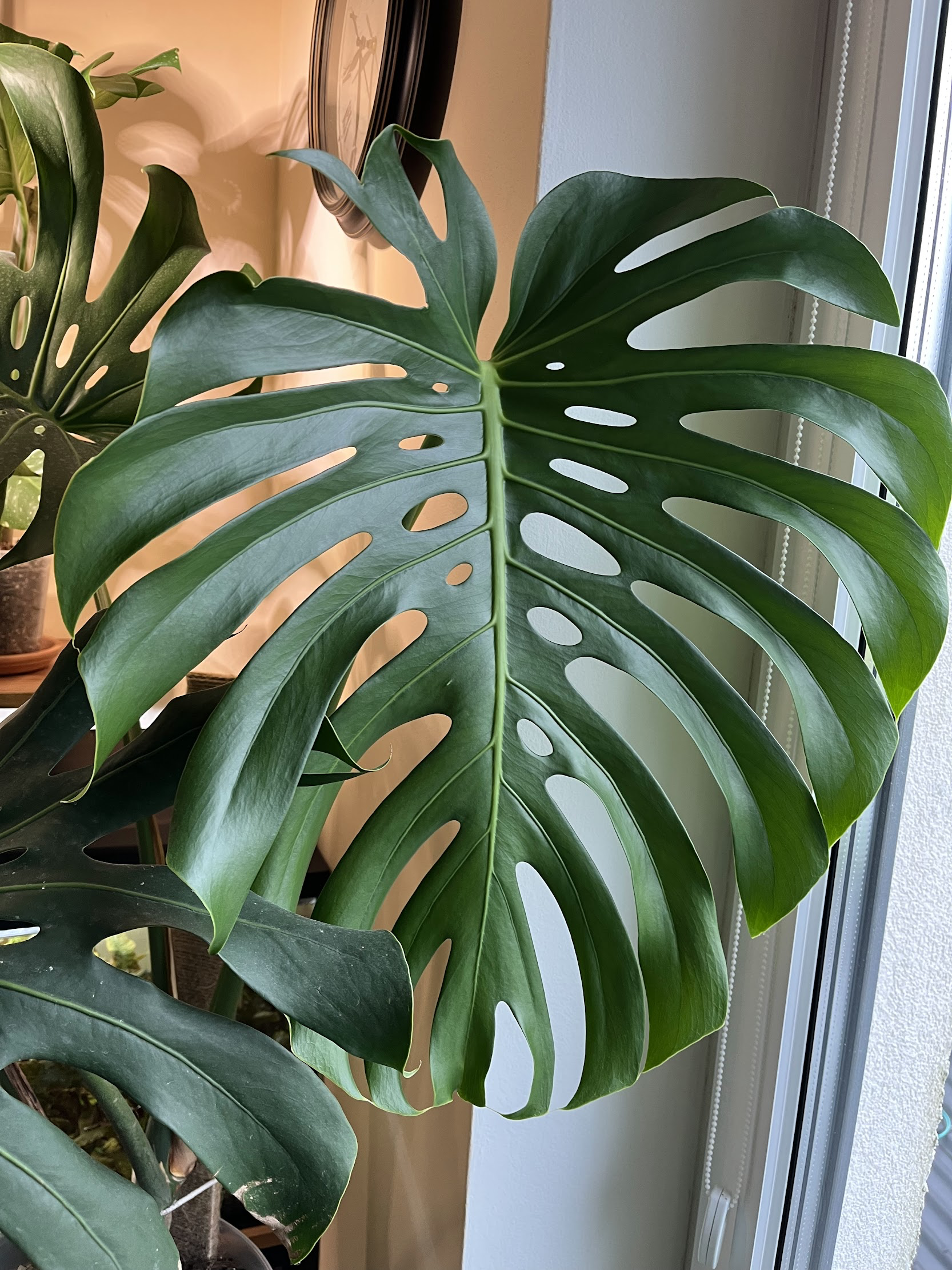
So far, this has made the biggest difference. My Monsteras are finally producing stronger growth and more mature leaves, even if they are still slower than I would like.
My location is probably part of that. Northern Europe is not exactly ideal for fast Monstera growth, even with extra light.
Overwatering Lessons
Before I understood the water issue, I relied on a moisture meter to avoid repeating the same mistakes. Mine was not perfect, but it was consistent enough to be useful. After watering, it usually read close to 10. I waited until it dropped to 1 before watering again, and I was shocked by how long that took. At first I expected underwatering symptoms. Instead, the plant stayed firm and started producing healthier new leaves. That taught me how easy overwatering is to miss. If the lower part of the pot is still damp, watering again can restart the whole cycle of root damage. Even a chunky aroid mix can stay too wet if it contains enough regular potting soil. That is why I now check moisture deeper in the pot instead of trusting the surface.
Here are the methods that helped me most:
- Use a moisture meter if you have one, but first make sure its readings are at least reasonably consistent.
- If you do not have a meter, insert a wooden stick deep into the pot and check whether it comes out damp.
- For small plants in plastic pots, compare the weight before and after watering to learn how the pot feels when it is dry.
Big/Large Form vs. Small Form
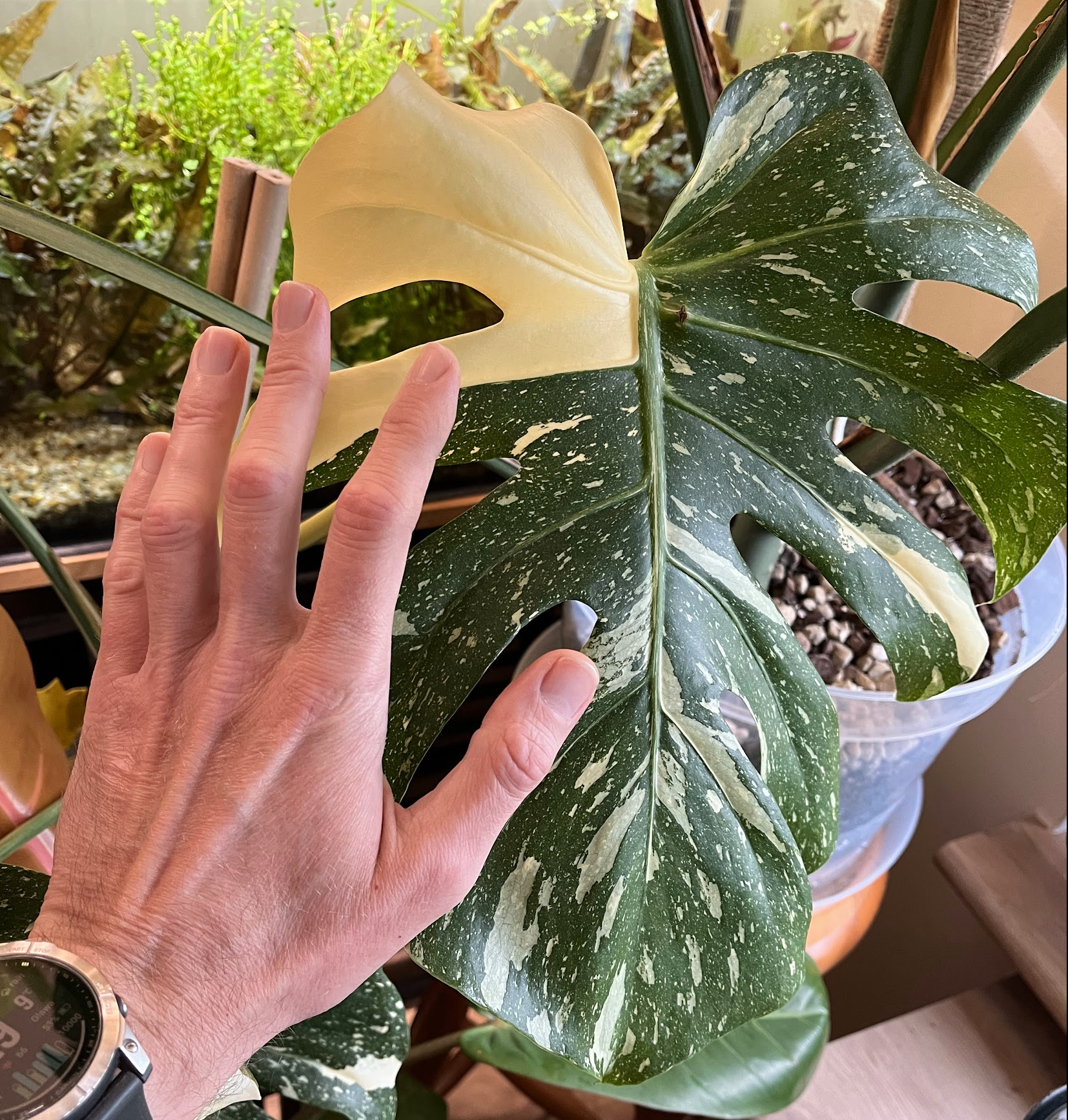
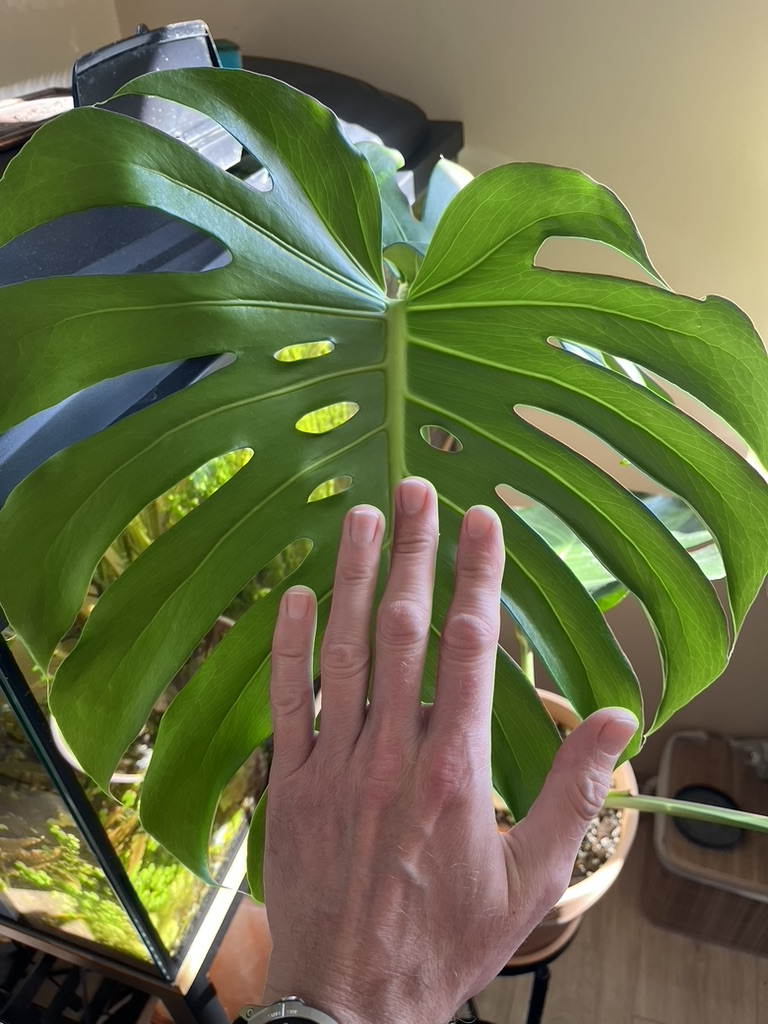
There is an endless debate online regarding large-form versus small-form Monstera deliciosa. Some growers contend that the difference boils down to maturity and growing conditions, and I think that is partly true. Poor light can definitely stretch out internodes and petioles. You can find old Monsteras with tiny leaves, just as you can find indoor plants in brighter climates putting out leaves of an impressive size. Still, I don’t believe growing conditions explain everything. My recently acquired young Thai Constellation had large leaves from the start, and each new one sized up even though my lighting was far from ideal. Moreover, the geniculum of the young Thai already displays those characteristic ruffles, while its green counterpart of a similar size does not. More recently, I bought a young plant sold as Monstera deliciosa ‘Large Form’. It had only three leaves, but they were already huge, and the newest one is the biggest I have ever grown. One possible explanation is that it was grown from a mature cutting. That could account for the leaf size, so I’m not taking it as definitive proof of a separate form.
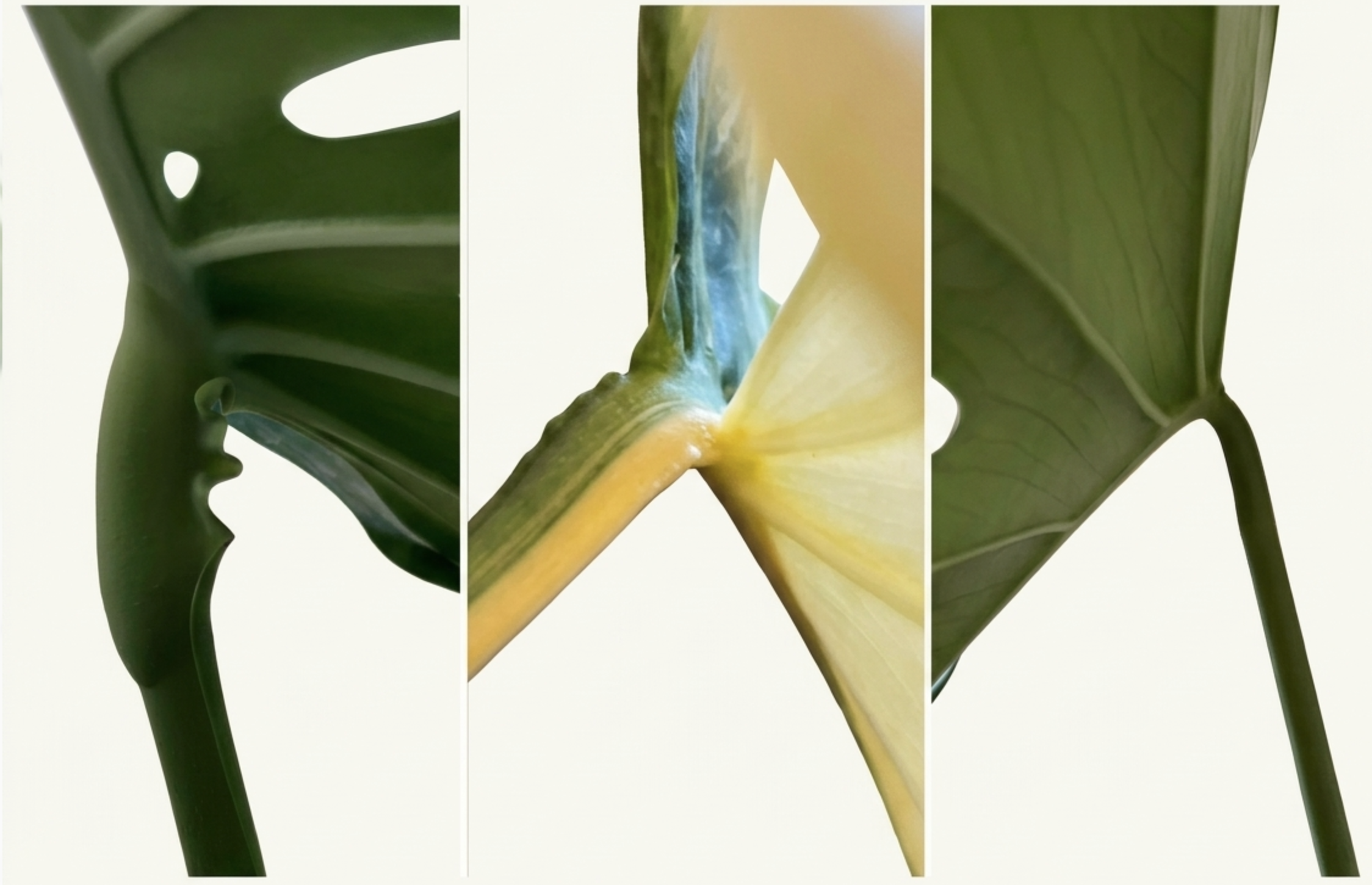
By contrast, my bushy Ikea Monstera has never produced leaves anywhere near that size. I suspect that crowding several plants into one pot may keep each stem smaller. I recently separated one of those plants and kept it near the others. I want to see whether a single plant on its own will start producing larger leaves over time. If one of my young green specimens eventually starts producing massive leaves with plenty of internal fenestrations, a ruffled geniculum, and a thick, rough petiole—that would be the ultimate proof for me. Until then, it’s just an educated guess.
Final Thoughts
I tend to approach plant problems the same way I approach bugs in software: I want to know what failed and why. With Monstera deliciosa, that mindset helped me look past the obvious explanation. Overwatering is still the fastest way I know to lose a Monstera indoors. Once rot reaches the stem, recovery becomes difficult and sometimes impossible. If the damage is advanced, it may be better to cut back hard and root the healthy part in water. That worked well for one of my cuttings, but it is a rescue plan, not the goal. For me, the real lesson was that watering is not just about frequency. Water quality matters too, and ignoring that can make a healthy-looking setup fail.
Tags: #MonsteraDeliciosa #RootRot #IndoorPlants #HouseplantCare #PlantParent #Overwatering #PlantTips