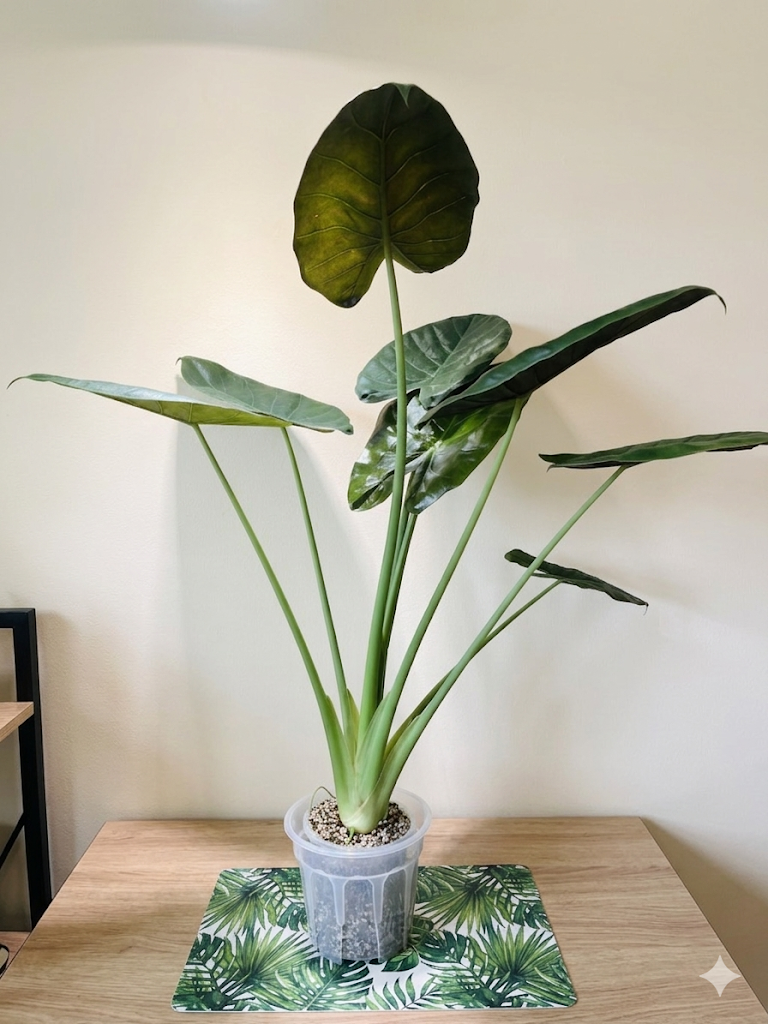
Alocasia Wentii
TL;DR
- If your aroids tend to rot in soil, Alocasia wentii may do the same. Semi-hydro with PON has been much more reliable for me.
- Spider mites seem to love alocasias, and they can be very hard to eliminate once they settle in.
When I bought this plant, I assumed my chances of keeping it happy were low. I tried it anyway.
It Started Pretty Badly
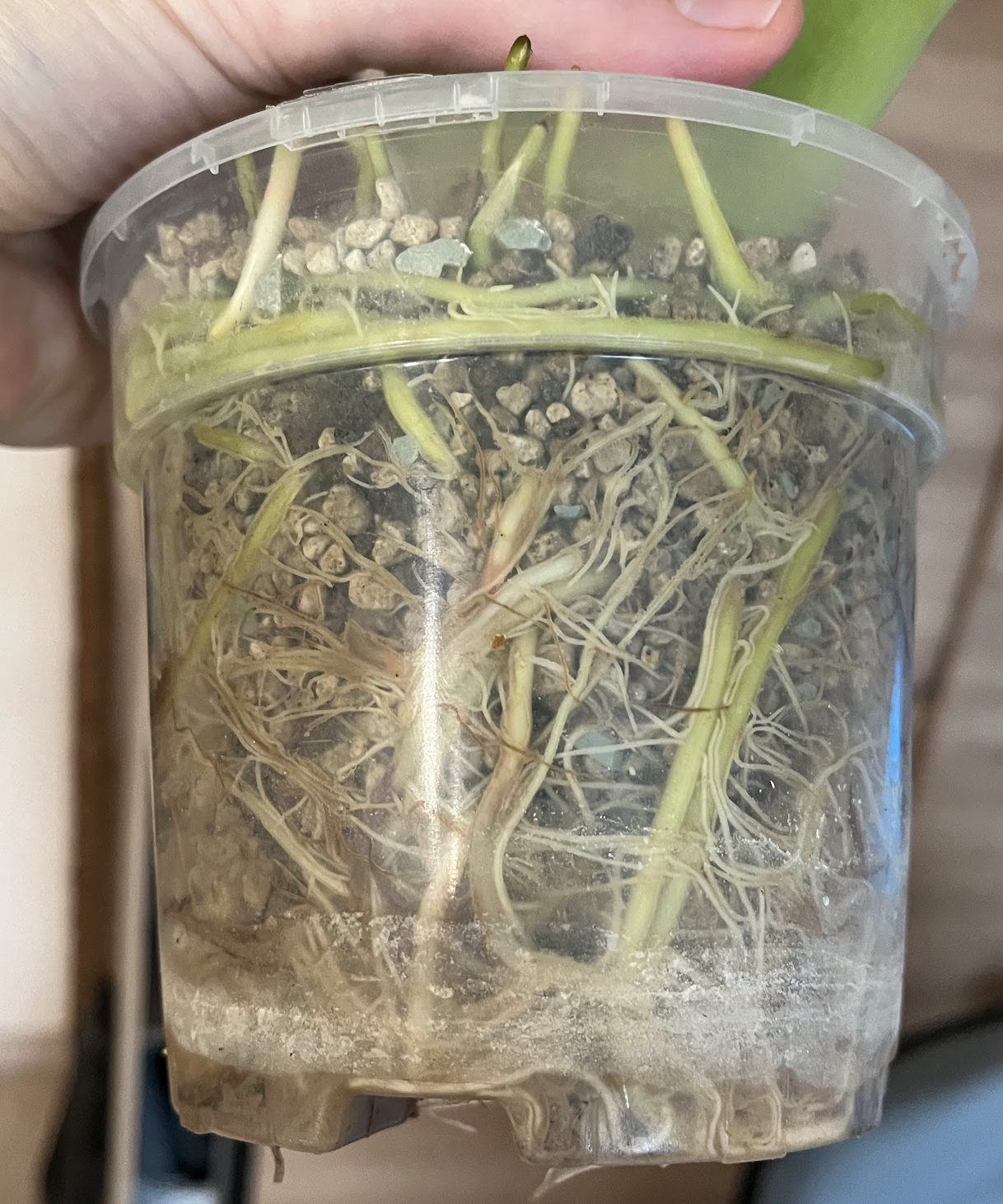
As usual, I repotted it right away. Because alocasias are prone to root rot, I used a chunky aroid mix in a tight terracotta pot and placed it on a south-facing windowsill. That setup failed quickly. The plant dropped leaves, older edges browned, and growth stalled. When I checked the roots, most of them were brown and mushy. Instead of tossing it, I moved it to semi-hydro with Lechuza PON. I trimmed the rotten roots, soaked the rest briefly in diluted hydrogen peroxide, and planted it in a clear pot with rinsed, soaked PON. Nothing happened for about two weeks. Then it pushed one new leaf, then another. After that, I moved it away from the window and put it under a 15 W Sansi grow bulb with a 60-degree beam.
That rescue worked, but semi-hydro only stays easy if you get a few basics right:
- Water quality matters. PON has almost no buffering capacity, so bad pH or hard water can lock out nutrients over time.
- Fertilizer matters just as much. Once the starter charge in PON is gone, you need a mineral fertilizer on a regular schedule. I use Hesi Hydro Growth.
- Keep the reservoir shallow. In my pots, about 2 to 3 cm of water is enough.
- Let the water run out before you refill. I usually wait about a day after the pot looks dry so the roots get fresh air before the next watering.
It Follows the Light Like Crazy
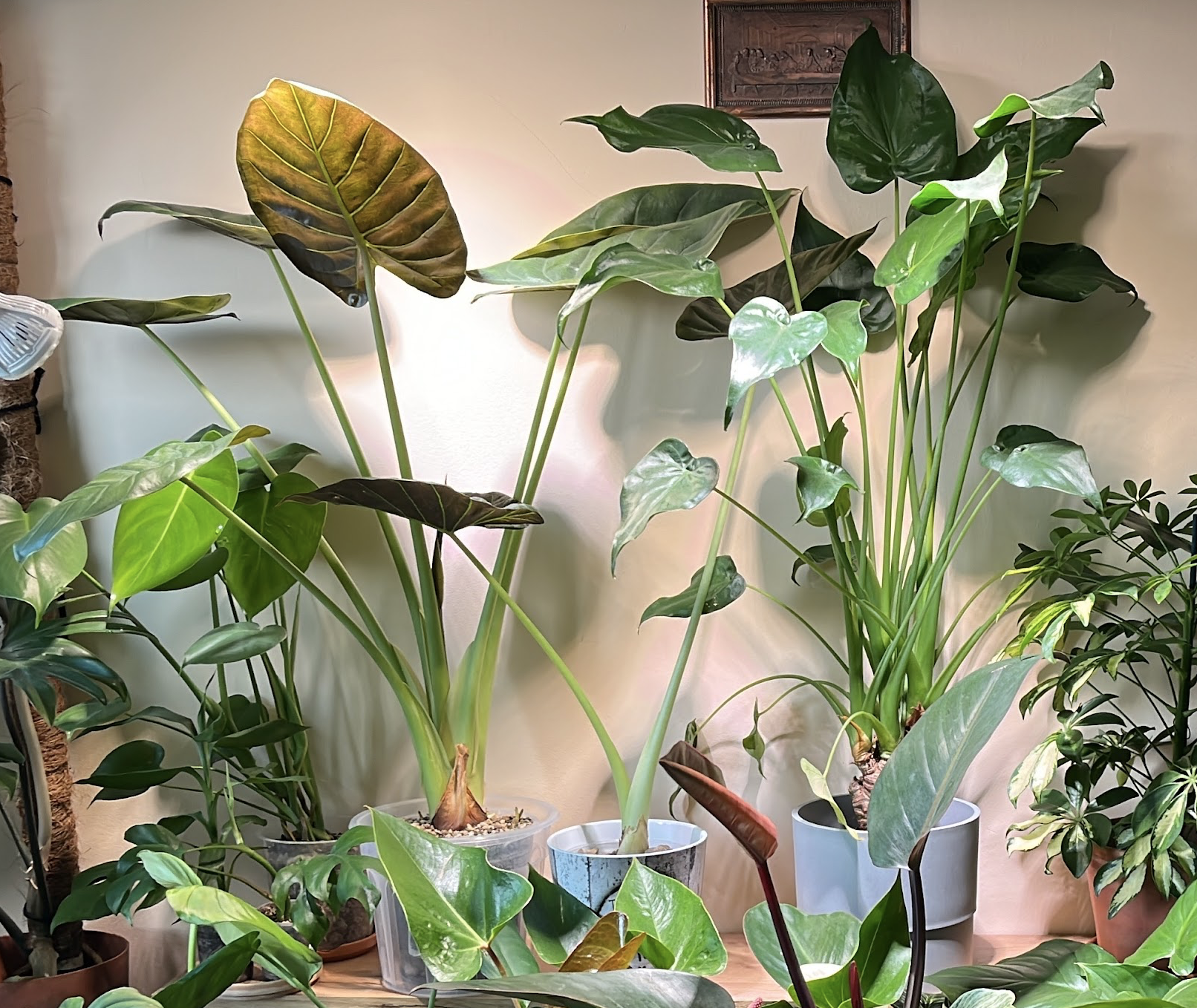
Alocasias are intensely phototropic. They bend fast toward the light because the shaded side of the petiole grows more.
When my wentii and cucullata sat near a window, I had to rotate them almost every day. If I forgot, the leaves leaned into the glass and risked burning.
That is one reason I prefer grow lights for them. The light is steadier, and the plant stays more balanced.
Pests
Spider mites love alocasias. Based on my own plants and what I have read, their fast growth seems to make them especially attractive to pests. My Alocasia cucullata has been the worst case. I am close to giving up on it because I cannot clear the mites for good. The same approach worked on my Ficus elastica: regular showers with soft water, then insecticidal soap or NeemAzal during outbreaks. On cucullata, the mites keep coming back. I also tried Canna Cure to leave a protective film on the leaves, but it has not solved the problem. Within days, the fine webs return. At this point, the biggest risk is spread to nearby plants. If you grow alocasias, assume pest control will be part of the routine.
They Do Not Change Over Time
Once an alocasia settles into a given mix, light level, humidity, and feeding routine, it does not change much unless one of those inputs changes. Unlike climbing aroids, it does not keep stretching higher and bigger forever. It replaces old leaves with new ones and often hovers around the same overall size. To push more growth, you usually need one of three things: more root room, more light, or more food. Too much of any one of them can still backfire.
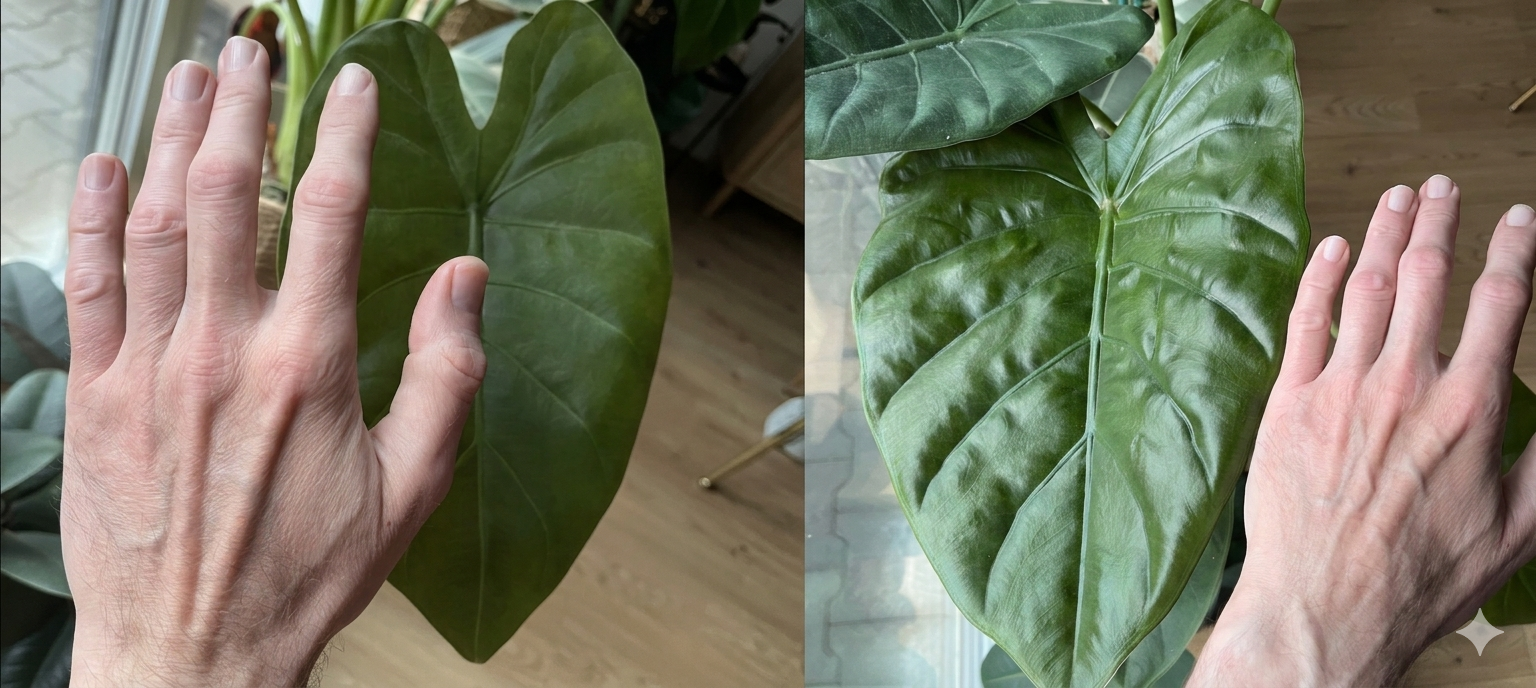
My wentii sat at three to four hand-sized leaves for months under a 15 W Sansi bulb. I thought the light was the limit, but repotting into a slightly larger pot changed that. With fresh PON and more root space, it now holds six or seven much larger leaves under the same bulb. In semi-hydro, a bigger pot has been low-risk for me if the wet-dry cycle stays intact.
Summary
Among the alocasias I grow, this one feels relatively easy. It handles average indoor humidity well and has grown reliably for me in semi-hydro. Its best trait is speed. New leaves arrive much faster than on Monstera deliciosa, so small damage never feels permanent. The tradeoff is stability. Once it reaches the size your setup can support, it mostly cycles leaves instead of transforming dramatically over time. The real downside is pests. Spider mites are persistent on alocasias, so I would keep this plant away from open windows and a little apart from the rest of the collection if possible. Even with that caveat, Alocasia wentii is a beautiful plant and a surprisingly fast grower.